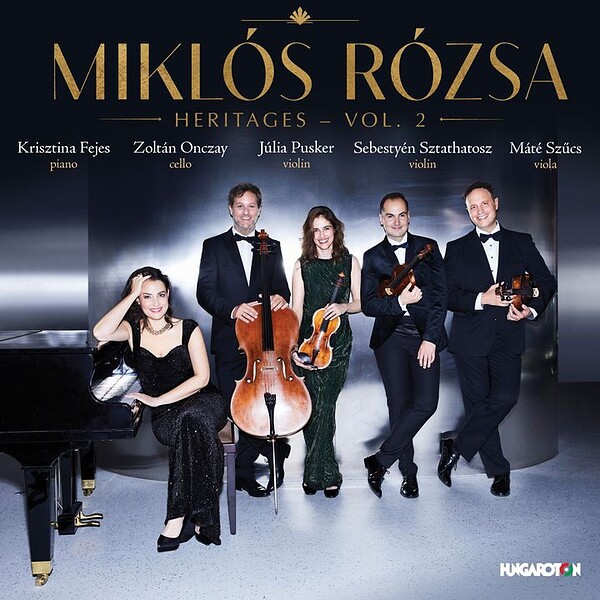
Miklós Rózsa: Heritages – Vol 2.
Hungaroton 32953
The journey into Miklós Rózsa’s chamber music continues. Bringing together five outstanding artists, Heritages – Vol. 2 celebrates the intimacy of making music together, where every voice matters.
The passionate Piano Quintet in F minor, Op. 2 and the expressive String Trio (Serenade) in D minor, Op. 1 reveal a compelling musical world, filled with lyrical warmth, emotional intensity and spirited dialogue.
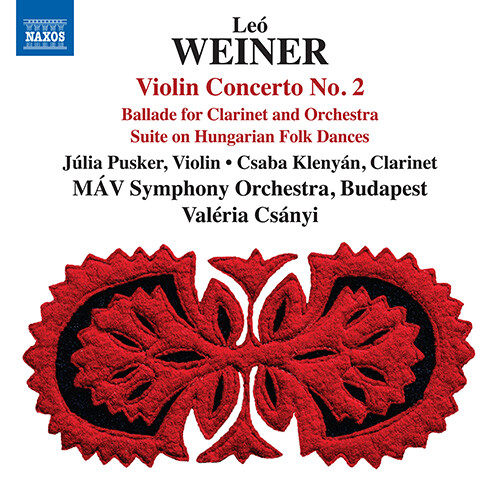
Leó Weiner Violin Concerto No. 2
Naxos 8.574756
Leó Weiner created a unique synthesis between German/French Romantic traditions and the Hungarian musical language at the beginning of the 20th century. The Ballade, admired for its beautiful dreamlike lyricism, was one of his most successful works. Weiner took inspiration from folk music as an escape from the 20th-century rise in modernism – his Suite integrates dance melodies into a work of symphonic scale and structure. The Second Violin Concerto is a defiantly Romantic post-war masterpiece in which darkness and light co-exist as an expression of humanity in an age of violence.

Leó Weiner Violin Sonatas Nos. 1 and 2
Naxos 8.574731
Leó Weiner’s legacy as an educator influenced generations of Hungarian musicians for a half century. His early work as a composer was internationally acclaimed for its new engaging sound, resulting from a unique synthesis of German and French Romanticism allied to a Hungarian musical language. These chamber works with piano are some of the best of his early opuses, from the ‘classical nobility and deep poetic substance’ of the Ballade, to the dramatic and stunningly beautiful Violin Sonata No. 2 – two pieces that were popular and widely performed in their day.

Leó Weiner Violin Concerto No. 1
Naxos 8.574707
Leó Weiner was one of the most important of all Hungarian pedagogues as well as being a distinguished composer. The success of his Serenade, written when he was 21, was immediate – its light, intimate and richly melodic qualities, some of which derive from stylised Hungarian dances, are still captivating today. The Violin Concerto No. 1 is a masterly orchestration of his Violin Sonata, Op. 9, alternating between the playful and the dramatic. The performance heard here restores 115 bars that were cut from the fourth movement, making this the first complete recording.


